A Simi Valley, CA Flower Shop · Florist / Flower Delivery
Fixing Wasted Ad Spend for a Simi Valley Florist
Problem
A flower shop in Simi Valley, CA was running Google Ads through a Smart Campaign with no targeting strategy behind it, and no tracking on whether it produced any online sales or phone calls.
What I found
The Smart Campaign was driving traffic to the homepage rather than relevant product or delivery-area pages, with no way to see which of that traffic turned into a sale, a phone call, or a quote request.
What I changed
Rebuilt the account around a diverse set of small, tightly focused ad groups organized by floral product and delivery service area, backed by location-based keyword research into what people in the shop's area were actually searching for. Rewrote ad copy and CTAs, and restructured geo-targeting, ad extensions, and ad scheduling around that research.
Why
A single broad Smart Campaign can't tell the difference between someone searching for same-day flower delivery nearby and someone searching for a specific arrangement, and treating those the same wastes spend on traffic that's unlikely to convert. Granular ad groups matched to real local search behavior, paired with tracking on the outcomes, made it possible to see what was actually working.
Result
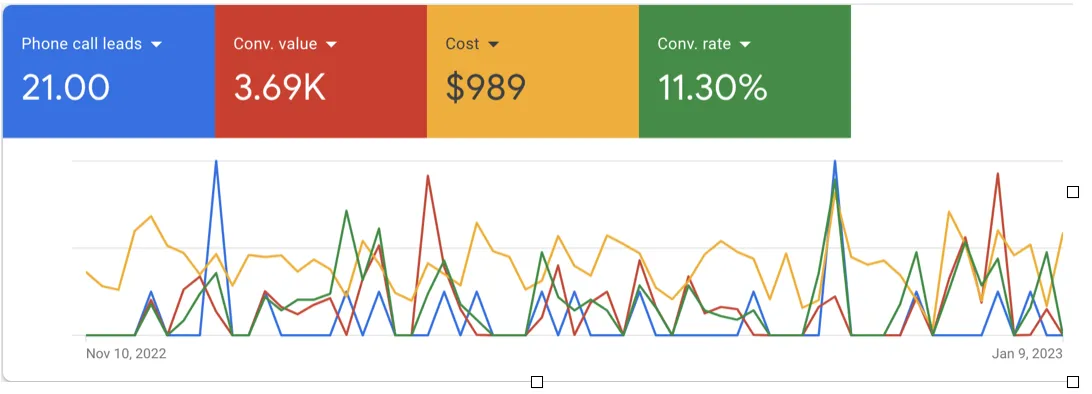
In the first 60 days on a $989 ad spend, the campaign produced $3,691 in tracked online revenue and 21 phone call leads. That's up from a Smart Campaign that had been producing only a handful of untracked leads per month.
What I learned
The fix wasn't just better targeting. It was pairing that targeting with real tracking, so results that used to be invisible, like a phone call or an online order, became measurable proof of what was working.
Ad group breakdown
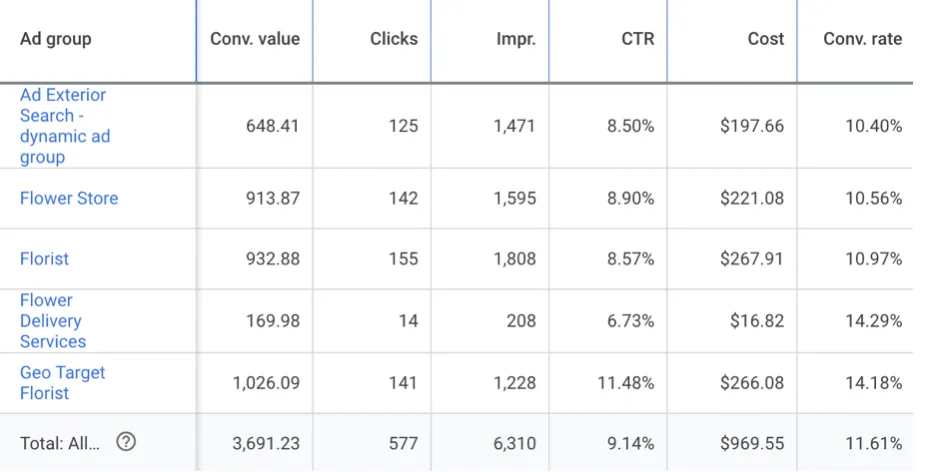
Five tightly-focused ad groups instead of one broad campaign, each covering a distinct piece of search intent:
Ad copy
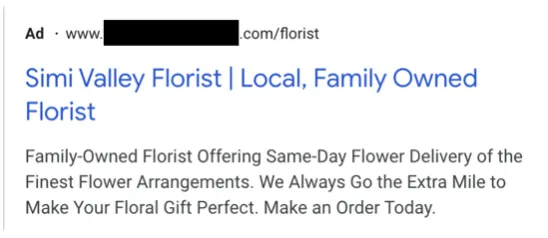
One of the ads running in the rebuilt account, written around the shop’s actual differentiators: